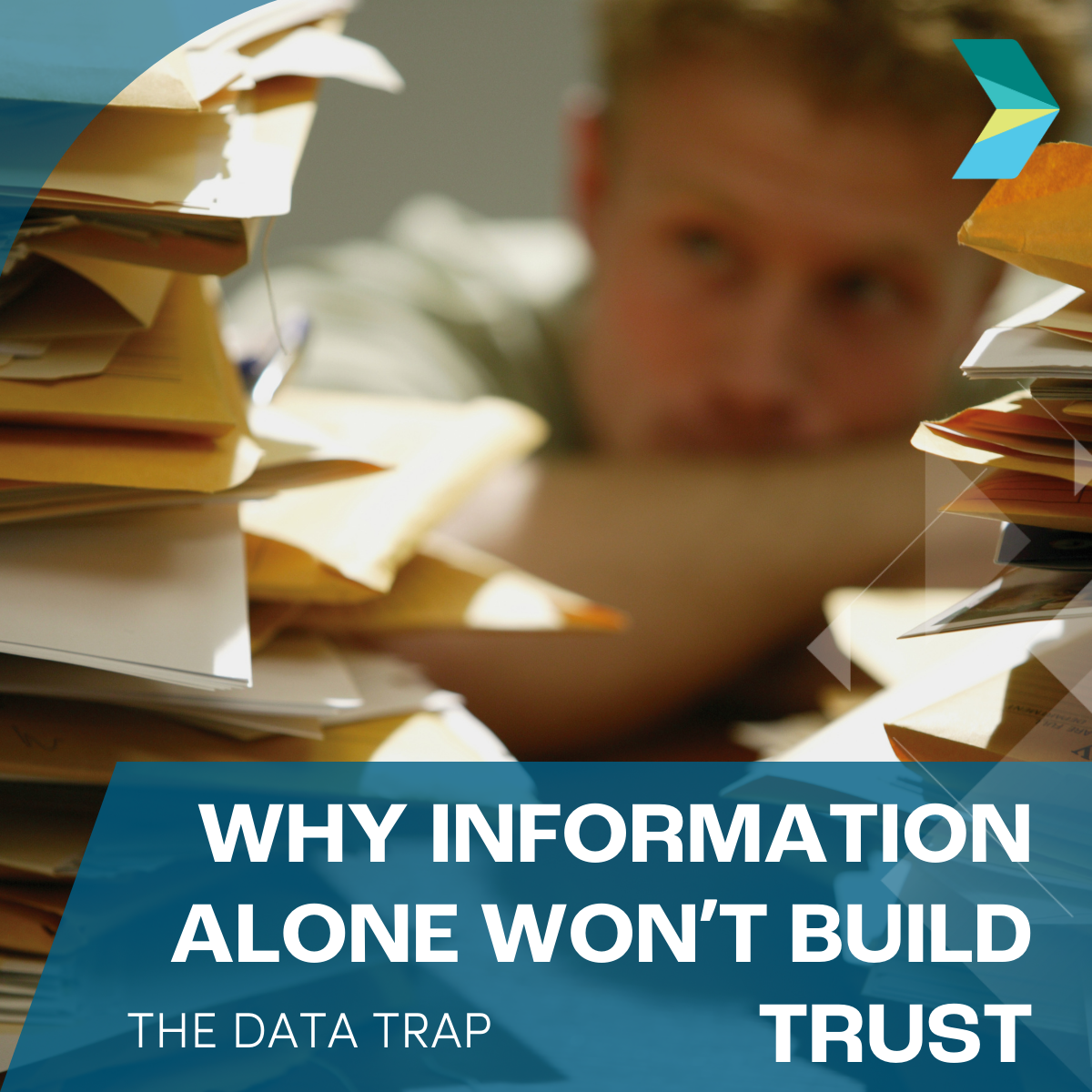
The data trap: Why information alone won’t build trust
More data doesn’t fix community concern. In fact, it can often make it worse.
In many projects across QLD and NSW, the instinctive response to community resistance is to provide more information. We release more studies, more technical detail, more reports. On paper, this makes sense. If people are concerned, surely better data will resolve the issue.
But that’s rarely what happens.
Instead, communities can become overwhelmed or even more sceptical. Large volumes of technical information don’t always answer the questions people are really asking. In some cases, they create confusion, make impacts feel more abstract, or give the impression that concerns are being managed away rather than genuinely addressed.
Our carefully prepared and evidence-based reports are also competing against opponent-generated misinformation. This content can take seconds to create and share and is often far more compelling (especially with video) and easier to absorb than a 60-page technical report.
From our time in communities, listening to concerns, it is clear that most people are not asking for more data. They are asking for honesty about how a project will affect them.
They want to understand:
how it will change their day-to-day lives?
how will it affect my family, my property, my health, my environment?
what impacts are unavoidable?
what’s negotiable and what’s already been decided?
They want straightforward explanations, not technical language. And importantly, they want transparency about uncertainty.
Technical teams are highly skilled at producing detailed assessments, but translating that information into something meaningful, accessible, and relevant to communities requires a different approach.
The projects that navigate this well don’t have less information at hand but they do communicate it differently. They focus on what matters to people, not just what can be measured.
By embedding communication, engagement and social planning specialists in your project team, you can ensure community perspectives are not only being captured, but recast as a filter across your project data.
Alysia Bradshaw is Principal Engagement and Social Planning and leads Onward’s Community Division.