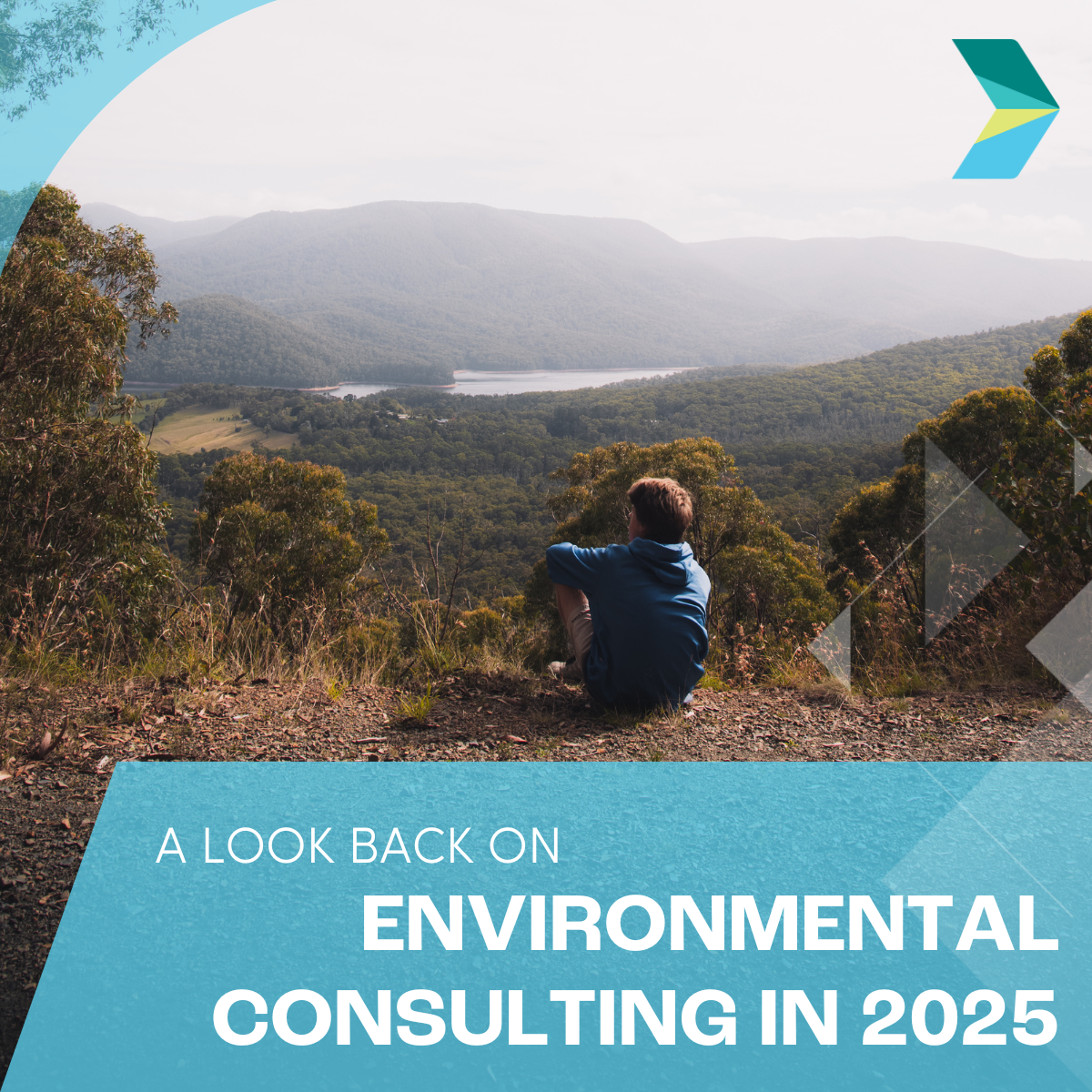
A look back on environmental consulting in 2025
2025 was a year of transition for environmental consulting in Australia – one that reshaped how proponents approach major projects.
National reform debates crystallised around the proposed overhaul of the Environment Protection and Biodiversity Conservation Act 1999 and the introduction of upfront ‘go’ and ‘no-go’ zoning to speed decisions and manage cumulative impacts. These changes promise clearer pipelines for renewables and resources, but also demand stronger environmental evidence earlier in project planning.
Renewables continued to expand rapidly, supported by the Federal Government’s inaugural Priority List for transmission, generation and storage projects and ongoing construction of large-scale wind and solar. That growth brought practical challenges: coordination with grid upgrades, community benefit expectations, and more rigorous consenting pathways.
Biodiversity policy emerged as a flashpoint. Scrutiny of offset schemes and calls for a net-gain approach raised the bar for how proponents measure and mitigate environmental harm, increasing demand for robust biodiversity evidence, monitoring and adaptive management.
Investors and corporate clients pushed harder on ESG, driving more consistent reporting, climate risk assessments and lifecycle thinking, from planning to decommissioning and circularity for technologies like solar panels. This reshapes project design choices and financing structures.
For the work we deliver across major projects and state significant developments, the practical impact is clear. Projects now need deeper up-front technical work (ecology, hazards, noise, cultural heritage), better spatial and data governance, and genuine community engagement from day one. Delivering timely, defensible approvals increasingly depends on integrating technical excellence with clear stakeholder and regulatory strategy.
Looking ahead, proponents who invest in early-stage evidence, transparent benefit-sharing and adaptive environmental management will reduce delivery risk and align with evolving community expectations. Those who adapt will be better placed to translate regulation into resilient, investable projects that deliver long-term environmental and social value.